
How Many Porta Potties Do I Need for a Jobsite?
Start with the headcount and let 1926.51(c) do the math. Under OSHA 1926.51(c), a crew of 20 or fewer needs 1 toilet facility, period. Once you cross 20 workers, OSHA calls for 1 toilet seat and 1 urinal per 40 workers, and that ratio holds until you hit 200 people, where it drops to 1 seat and 1 urinal per 50. A 35 person framing crew in Indio, for example, falls into that 20-to-200 bracket and needs 2 units minimum. Add an ADA accessible porta potty if any worker needs one, since accessible units aren't automatically part of the base count. Most contractors round up rather than sit exactly on the line, because a broken unit on a Tuesday shouldn't shut down the crew. Check the standard porta potty rental page for what a basic unit includes, and if the job runs past a few weeks, a monthly porta potty rental usually beats renting week to week.
How Many Porta Potties Do I Need for an Event?
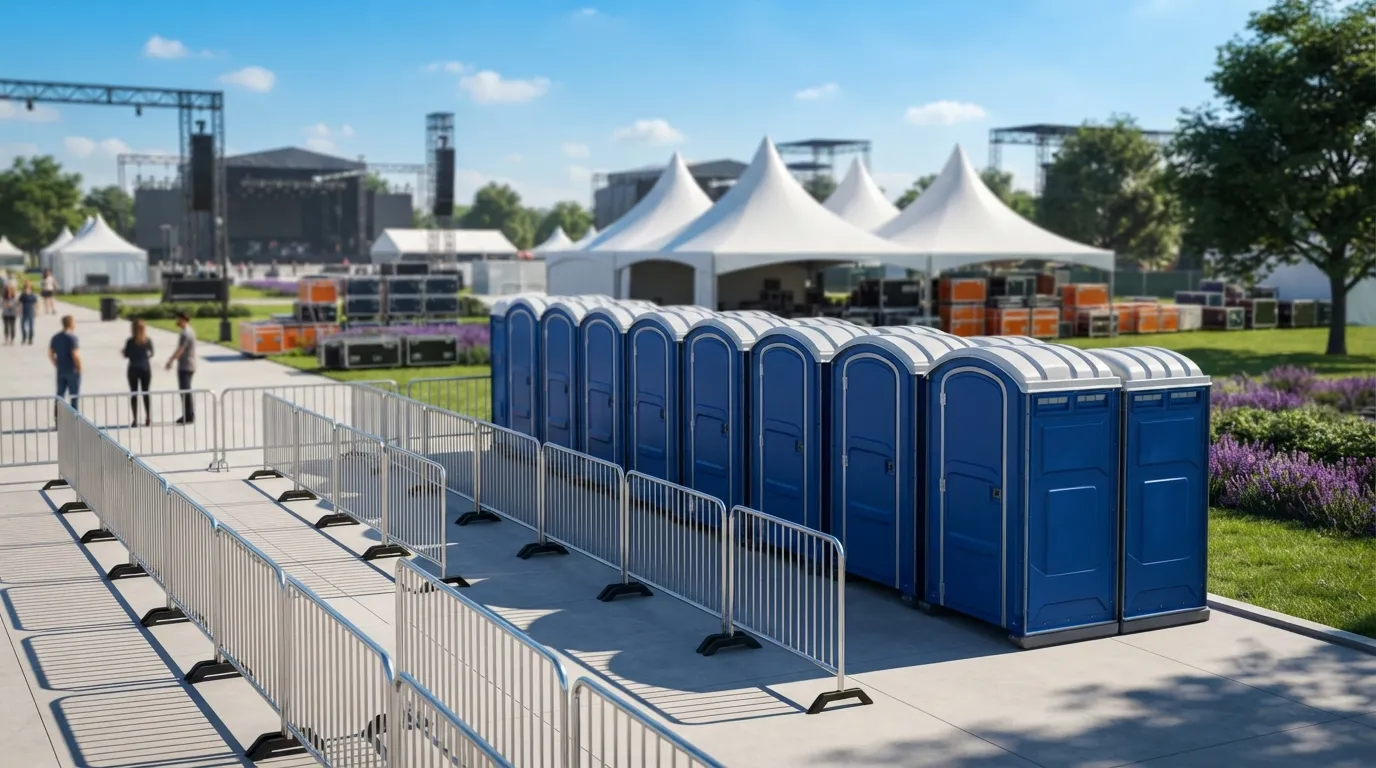
Events don't run on an 8 hour shift, so the math shifts. A rough industry baseline: 1 unit per 50 people for the first 4 hours, then add units as hours or headcount climb. Alcohol changes the picture fast, since drinking increases both frequency and urgency, so add 1 extra unit per 100 guests if you're serving beer or wine. Multi-day festivals need a service plan on top of the count, not just more toilets sitting there. Here's a rough table for planning an outdoor event in Indio:
| Guests | Event length | Units needed |
|---|---|---|
| 100 | 4 hours | 2 |
| 250 | 4 hours | 5 |
| 250 | 8 hours | 6-7 |
| 500 | 4 hours | 10 |
| 500 | 8 hours, alcohol served | 13-15 |
For a wedding or private party, see wedding restroom rental; for something larger like a festival or fair, check festival restroom rental or county fair restrooms.
Worked Example: A 300 Person Backyard Wedding in Indio
Take a 300 guest wedding running 6 hours with a full bar. Base count at 1 per 50 for 4 hours gets you to 6 units. Add 2 hours of runtime and the alcohol adjustment, and you land closer to 8 to 9 standard units, plus at least 1 accessible unit under ADA Standards section 213.2, which requires 5 percent of clustered single-user units to be accessible, with a minimum of one no matter how small the cluster. A lot of Indio couples upgrade part of that count to a deluxe flushable porta potty near the reception tent and keep standard units near parking. Weekend rates for standard units run higher than weekday, so book early and lock in a rate before the venue calendar fills. If the guest list is really this size, a restroom trailer rental with multiple stalls often makes more sense than a wall of single units.
What About Dumpster Sizing for the Same Job Site?
Toilets aren't the only thing crews underestimate. A 10 yard dumpster holds about 10 cubic yards of debris, which works out to roughly 1,350 cubic feet, and runs about 12 feet long, a tight fit for small cleanouts and single-room remodels. So how many feet is a 10 yard dumpster? Close to 12 feet long, same as noted above. A 20 yard dumpster holds around 2,700 cubic feet and stretches close to 20 feet, and answering how many tons does a 20 yard dumpster hold, it typically hauls 2 to 3 tons depending on what's inside. Step up to a 30 yard dumpster and you're near 4,050 cubic feet, and if you're wondering how many tons can a 30 yard dumpster hold, it's generally rated for 3 to 4 tons of mixed debris. A 40 yard dumpster tops out near 5,400 cubic feet, answering how many cubic feet in a 40 yard dumpster, and on how many tons does a 40 yard dumpster hold, it can carry 4 to 5 tons on a typical construction load, though dense material like concrete or shingles fills the weight limit long before the box looks full. Check dumpster weight limits before you order, and see dumpster sizes and dimensions for a side by side. A roll-off truck needs about 60 feet of straight clearance behind it to place the box, so measure your Indio driveway or lot before delivery day. For general remodels, 10 yard dumpster rental usually covers it; bigger jobs move up to 20 yard dumpster rental, 30 yard dumpster rental, or 40 yard dumpster rental.
Should I Add a Handwashing Station Too?
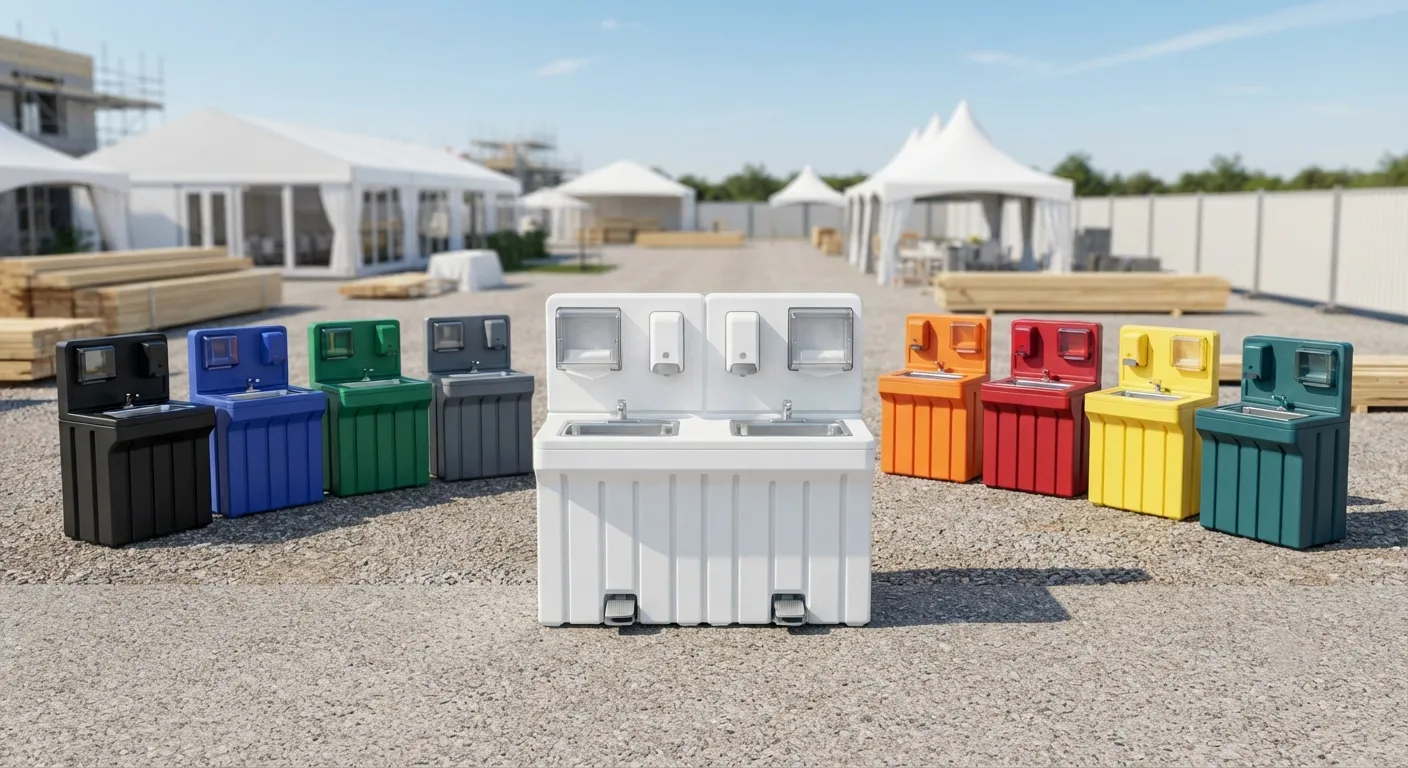
Yes, in most cases, and it's often required, not optional. Under 29 CFR 1910.141(d)(2), washing facilities need soap and towels or a hand drying device, and hand sanitizer alone doesn't satisfy that. If your crew is applying paint, coatings, herbicides or insecticides, OSHA 1926.51(f)(1) specifically requires washing facilities for that contaminant exposure, on top of general sanitation. A single handwashing station rental usually covers a crew of 20 to 25 people comfortably, similar in scale to the ANSI/PSAI Z4.3 service baseline of one weekly visit supporting up to 10 users over a 40 hour week, though busier sites need more frequent service. Farm labor operations fall under a different rule: OSHA 1928.110 requires potable water, toilets and handwashing within a quarter mile walk of hand-labor employees, at 1 facility per 20 workers. If you just need sanitizer without full washing, look at hand sanitizer station rental instead, though it won't satisfy the 1910.141 standard on its own.
Does a Multi-Day Job Change the Count?
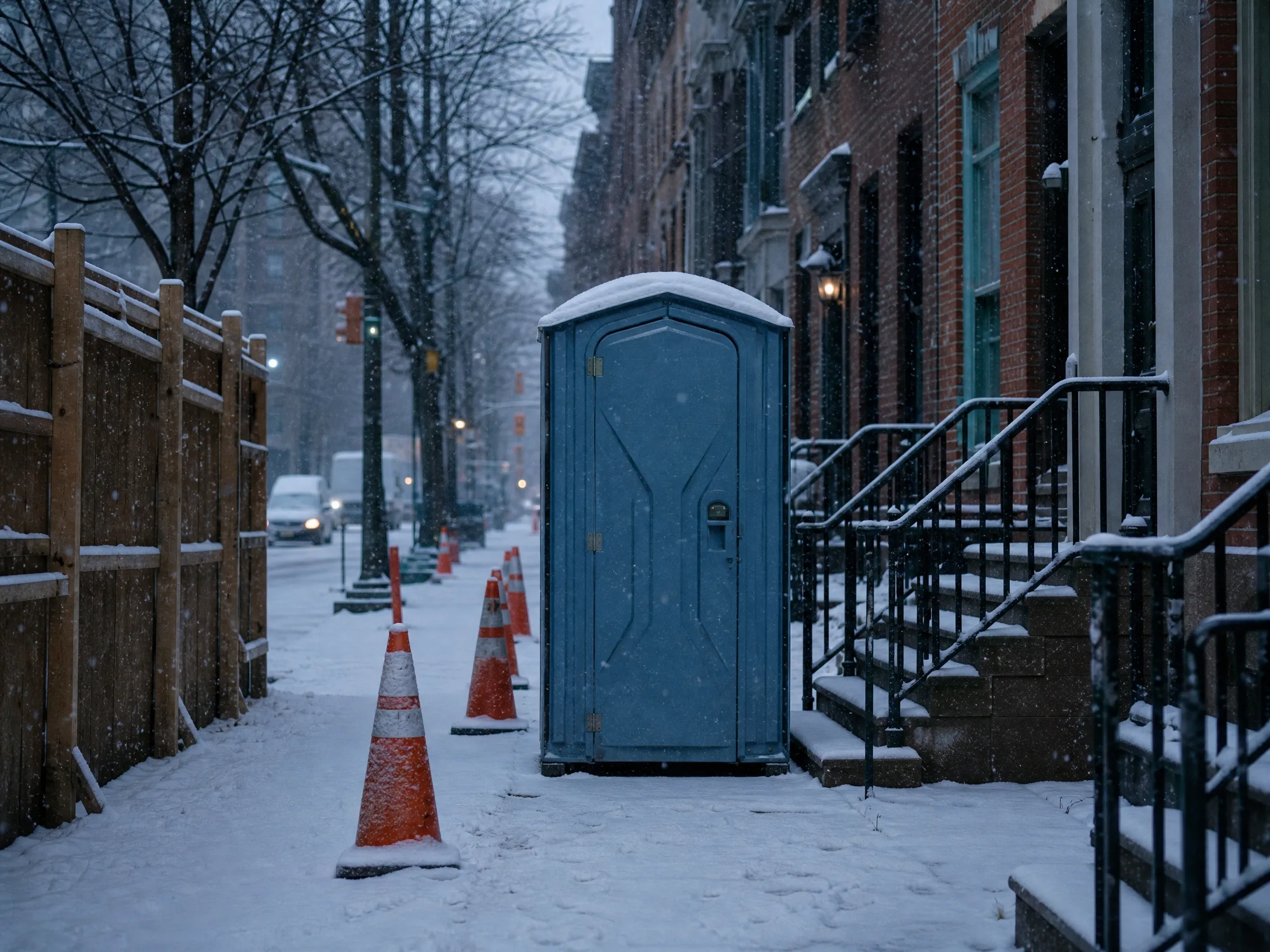
It changes the service schedule more than the unit count. A crew of 35 working a 3 week job in Indio still needs the same 2 units required by 1926.51(c), but now servicing frequency matters more, since waste accumulates over days instead of hours. Longer jobs also mean weather exposure adds up, and Indio sits inland in a desert climate where tanks can fill faster with heavy crew use. For anything running more than a couple weeks, compare the porta potty rental per day rate against a monthly porta potty rental rate, since the per-day cost drops noticeably once you commit to a longer term. Multi-week festivals or fairground events need the same logic: more service visits, not necessarily more toilets, unless attendance grows. If a job could get shut down without a backup unit, treat emergency porta potty rental as part of the plan, not an afterthought.
Where Should Units Go on an Indio Site or Venue?
Placement affects both usability and code compliance, so it's worth planning before delivery trucks show up. ADA Standards section 403.5.1 requires a minimum 36 inch clear path to any accessible unit, and section 405.2 caps ramp slope at 1:12 if the ground isn't level. Ground surfaces need to be stable, firm and slip resistant per ADA Standards section 302.1, which rules out loose gravel or soft sand as a pad for accessible units. Keep units within a reasonable walk of the work zone or crowd, out of direct site traffic, and away from any area needing the 60 foot clearance a roll-off truck needs for delivery. Indio is roughly 8.3 miles from Coachella and 8.3 miles from La Quinta, so events pulling attendees from both directions should plan parking and restroom placement together. See the full porta potty placement guide for pad requirements, and porta potty permit requirements if the units sit in a public right of way, since that placement needs confirming with the city before delivery.
Frequently Asked Questions
How many porta potties do I need for 50 people?
For a 4 hour event, 1 unit typically covers up to 50 guests. Stretch the event to 8 hours or add alcohol service, and plan for 2 units instead. See how many porta potties do i need above for the full headcount table.
How many toilets does OSHA require on a construction site?
OSHA 1926.51(c) requires 1 toilet for crews of 20 or fewer, then 1 seat and 1 urinal per 40 workers up to 200 people. Full brackets are in the OSHA portable toilet requirements guide.
How many tons does a 30 yard dumpster hold?
A 30 yard dumpster generally handles 3 to 4 tons of mixed construction debris, though dense material like concrete fills the weight cap well before the box looks full. Check dumpster weight limits for specifics.
How many cubic feet are in a 20 yard dumpster?
A 20 yard dumpster holds about 2,700 cubic feet and runs close to 20 feet long. See dumpster sizes and dimensions for full measurements across sizes.
Do I need an ADA accessible unit at my event?
Yes, if you're clustering standard units. ADA Standards section 213.2 requires at least 5 percent of clustered single-user toilets to be accessible, with a minimum of one unit regardless of cluster size. Details are on the ADA accessible porta potty page.
Does serving alcohol change how many units I need?
Yes. Alcohol increases both bathroom frequency and urgency, so add roughly 1 extra unit per 100 guests beyond your base headcount count. This applies on top of the standard 1-per-50-for-4-hours baseline described above.
Next step
Get a delivery date
Tell us the address, the dates and the headcount. We size the order and confirm the route.