
Where should a porta potty go on my site?
Pick flat, firm ground first. ADA Standards section 302.1 calls for stable, firm, slip resistant surfaces, and that rule is a good baseline even for a standard unit that does not need to be accessible. Keep the door swing clear, since a technician needs room to open the tank hatch and run a hose to the truck. If you are placing near a curb or a sidewalk in Indio, leave the path open, because a blocked route creates the same problem the accessible route rules are trying to prevent. For a construction lot, match unit count to crew size using OSHA portable toilet requirements: OSHA 1926.51(c)(1) sets 1 toilet for 20 workers or fewer, then 1 toilet and 1 urinal per 40 workers above that. Ground that is soft after irrigation, common on the edges of Coachella Valley properties, will not hold a loaded unit; ask your standard porta potty rental provider to reroute the truck path instead of forcing a spot.
Do I need a permit to place a unit in the street or right of way?
Placement in the public right of way needs confirming with the city; check with Indio before you set a unit on a sidewalk, parkway strip or curb lane. On private property, most placements do not need a permit, but a roll-off dumpster staged in the street usually does trigger a review, and dumpster placement permit cost varies enough by city that it is worth a call before delivery day. If your project already needs a roll-off dumpster rental sitting curbside, ask about dumpster permit requirements at the same time you ask about the toilet placement, since both often go through the same counter. A construction dumpster rental staged fully on a private pad, with the standard 60 feet of straight clearance behind the truck for delivery, usually clears faster than one that needs street space.
How much clearance does a unit or trailer need?
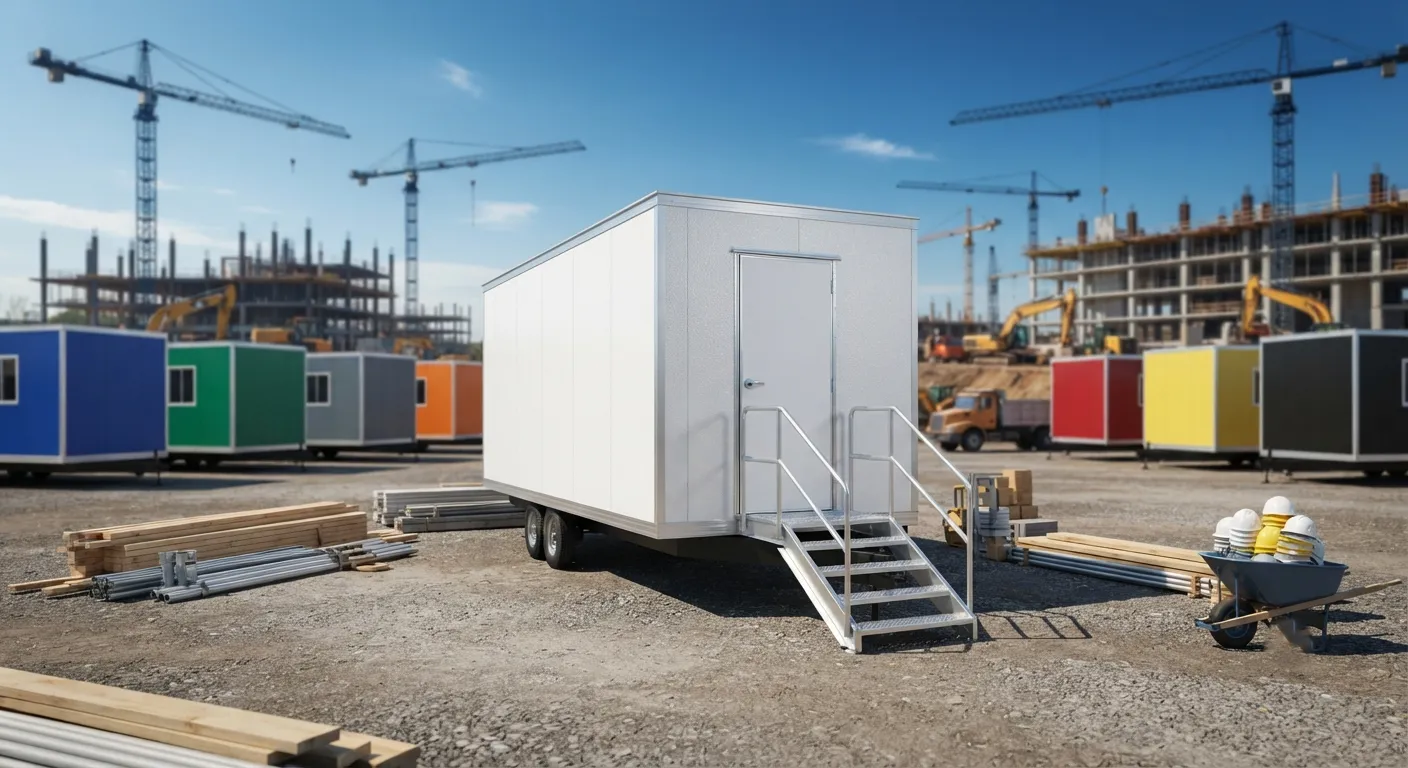
A standard unit runs about 44 by 48 inches on the ground and stands 92 inches tall, so give it a clear 5 foot square plus a servicing lane. A restroom trailer rental needs more: figure the same 60 foot straight clearance behind it that a roll-off truck needs, since both arrive on similar chassis. If you are placing an ADA accessible porta potty, the door opening must clear 32 inches per ADA Standards section 404.2.3, and the route to it needs a 36 inch minimum clear width under section 403.5.1. Inside, a 60 inch turning circle is required by section 304.3.1, so do not tuck an ADA unit against a wall or a dumpster. ADA Standards section 213.2 also requires that at least 5 percent of a cluster of single-user units be accessible, never fewer than one, which matters once you are past two or three units on an event site. See the ADA restroom requirements page for the full clearance list before you finalize a layout.
What else affects where a unit can sit?
Slope matters more than most people expect. If a ramp is needed to reach a unit, ADA Standards section 405.2 caps running slope at 1:12, so a curb cut or a graded ramp has to be shallow, not a quick wedge of gravel. Reach range matters for the handle and paper dispenser too: section 308.2.1 sets a 48 inch maximum and 15 inch minimum forward reach, and section 309.4 requires operable parts that take no tight grasping and no more than 5 pounds of force. If your unit sits near a wash-down area for paints, coatings or pesticides, OSHA 1926.51(f)(1) requires washing facilities for that contaminant exposure specifically, which is a separate rule from general toilet counts. Storage containers and mobile office trailers have their own placement quirks; a mobile office trailer rental with damaged or misaligned mobile office trailer replacement doors will not seal against dust, a real issue on an exposed Indio lot. For septic-side work, a septic pumping service truck needs the same straight clearance as a dumpster truck, and a residential tank is typically pumped every 3 to 5 years depending on tank size and household size, whether you are in Indio or calling in a placerville septic pumping service for a second property up north.
Do I need extra clearance for a handwashing station?
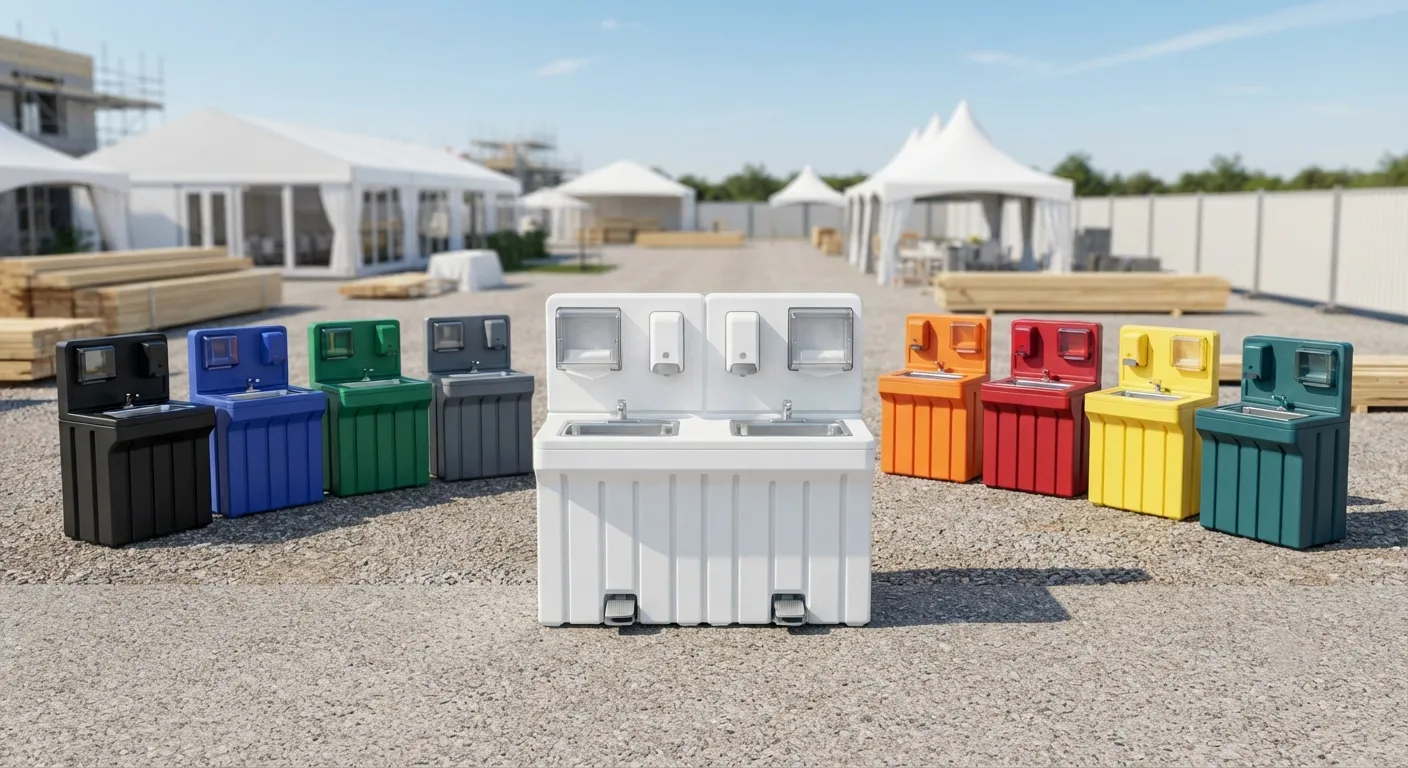
Yes, plan for foot traffic on both sides. A handwashing station rental unit needs open access on the pump side and the drain side, and 29 CFR 1910.141(d)(2) requires soap and towels or a hand drying device, not sanitizer alone. If a foot pump or ozark river portable sink replacement parts ever need swapping, that same clearance lets a technician work without moving the whole unit.
Can I place a unit on gravel or dirt instead of concrete?
Yes, if it is compacted and level. Loose gravel or soft dirt can let a unit tip once the tank fills, especially with a full 60 to 70 gallon holding tank shifting weight. Ask about a porta potty placement guide walk-through with your driver before delivery if the surface looks uncertain.
How far from the building does a unit need to sit?
There is no fixed distance in the codes we can cite, but keep it reachable within a short walk and clear of windows and air intakes. For crews on hand-labor agricultural work, OSHA 1928.110 sets a facility within a quarter mile walk, which is a useful distance rule even off the farm.
What is the closest city if I need units delivered outside Indio?
Coachella sits about 8.3 miles southeast and La Quinta about 8.3 miles south, both routine drop-offs. Rancho Mirage runs 14.1 miles west, Palm Springs 20.7 miles west, and Desert Hot Springs 25.6 miles northwest; check service areas for full coverage.
Do event sites need different placement than construction sites?
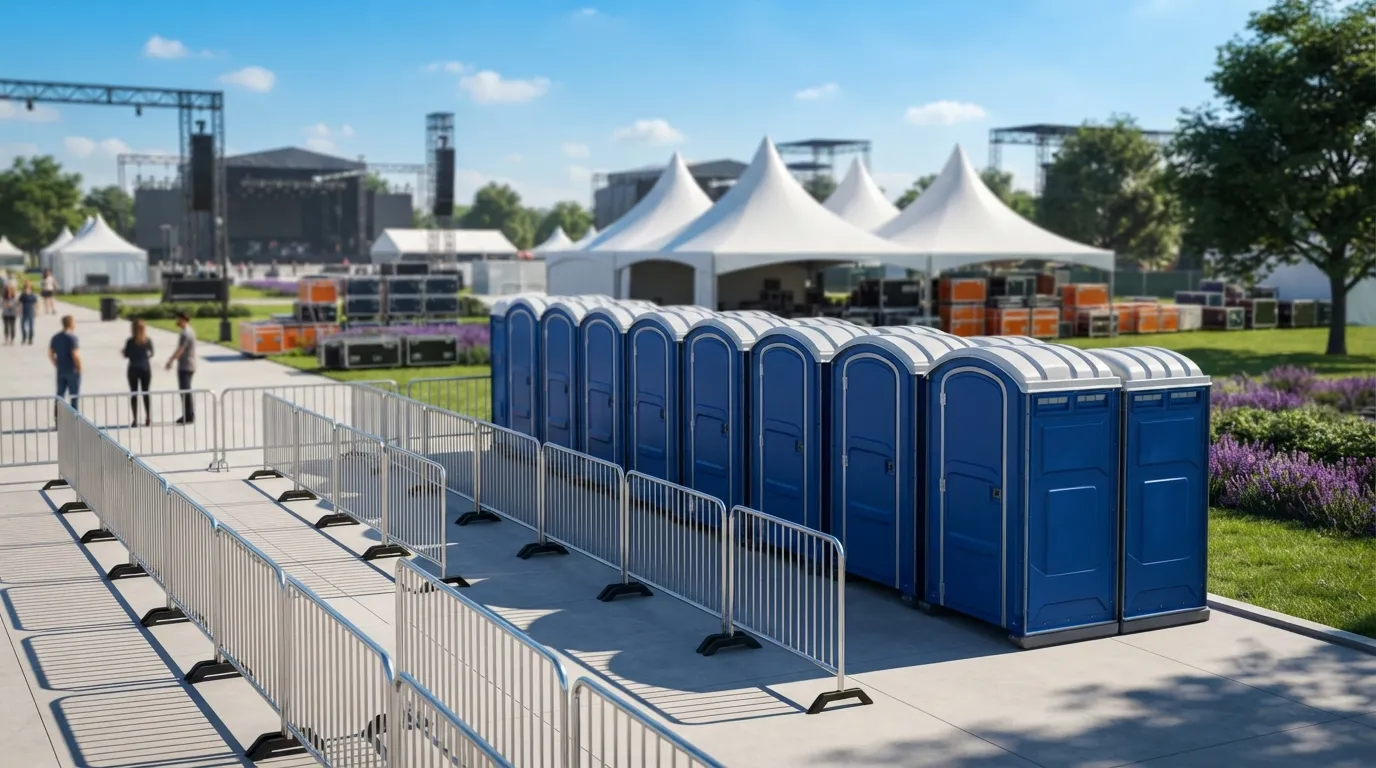
Yes, mostly for crowd flow. An event restroom rental layout spreads units near exits and food areas, while a construction lot groups them near the crew break area under construction site services planning instead.
Next step
Get a delivery date
Tell us the address, the dates and the headcount. We size the order and confirm the route.