
Do you need a permit for a dumpster or porta potty in Indio?
Short answer: it depends on where the unit sits, not what it is. A porta potty or roll-off dumpster parked on your own property, clear of the sidewalk and street, generally does not trigger a permit review anywhere we have worked. The moment either one lands on a public street, curb lane or right of way, that is a different conversation, and it is NOT VERIFIED without a direct check with the city of Indio. We are not going to guess at an ordinance number and hand you something wrong. If your job site is tight and the only spot for a construction dumpster or a standard porta potty rental is the street frontage, tell us before delivery day so we can confirm placement rules with the city rather than find out after the truck shows up. This is true whether you are asking about a dumpster permit for a home remodel in Indio or a portable toilet rental for a weekend event. Rules vary by city and even by street, which is why a Delaware porta potty rental or a Jersey City dumpster permit process looks nothing like Indio's, and why we will not repeat someone else's rule here as if it were local fact.
What are the porta potty placement rules on private property?
On private property, placement is mostly physics and access, not paperwork. A standard unit needs about 44 by 48 inches of ground space and stands roughly 92 inches tall, so give it a spot with headroom and level ground. For ADA accessible porta potty placement, ADA Standards section 403.5.1 calls for a 36 inch clear route to the unit, and section 404.2.3 requires a 32 inch clear door opening. A 60 inch turning circle, per ADA Standards section 304.3.1, matters if a wheelchair user needs to approach and turn. Surfaces should be stable and slip resistant under ADA Standards section 302.1. If you are clustering multiple units for an event restroom rental or a festival restroom rental, ADA Standards section 213.2 requires at least 5 percent of clustered single-user units to be accessible, never fewer than one. None of this is a city permit issue. It is a placement issue, and our porta potty placement guide covers driveway slope, delivery truck clearance and wind exposure in more depth.
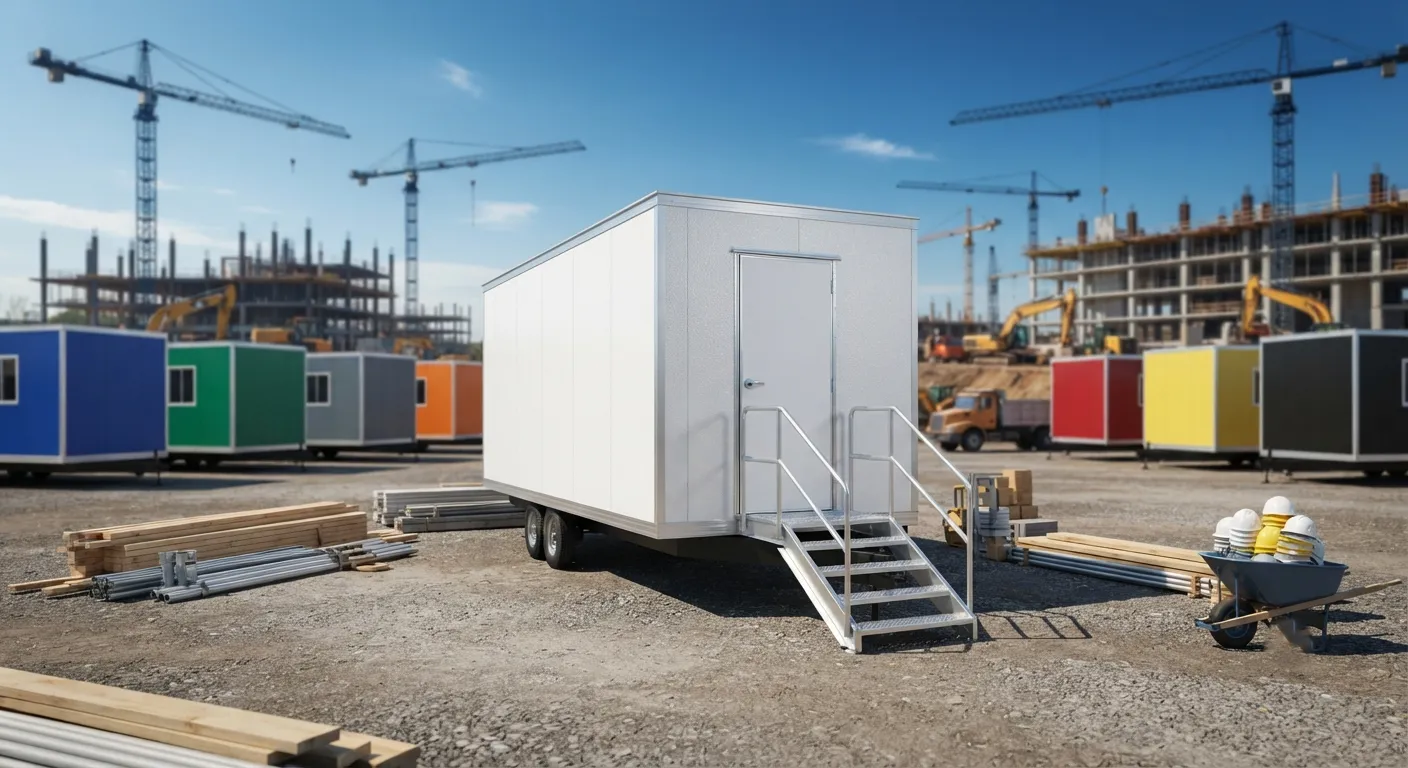
Does a construction site need a permit for the toilets themselves?
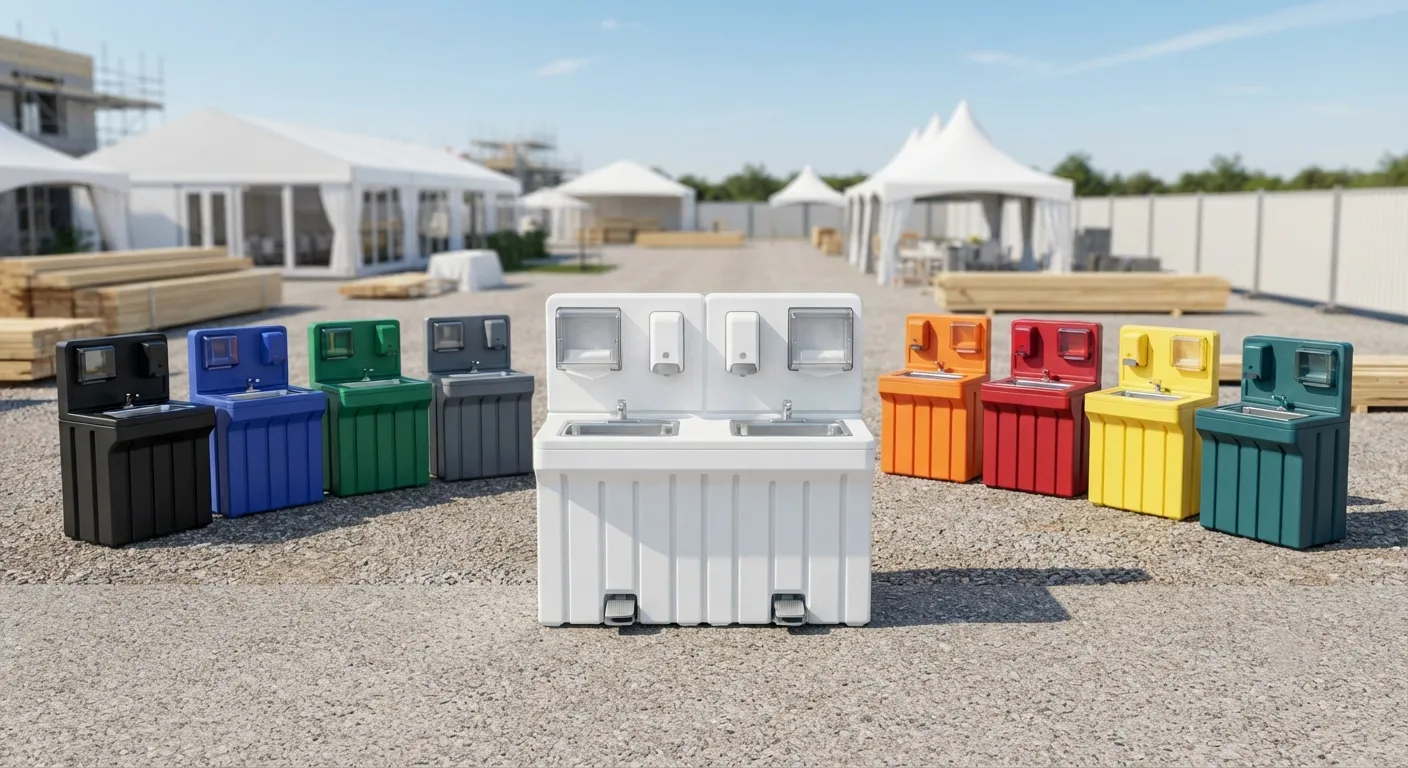
No permit governs the toilet count on a construction site, but OSHA does. OSHA 1926.51(c) sets the ratio: 1 toilet facility for 20 workers or fewer, then 1 toilet seat and 1 urinal per 40 workers as headcount climbs from 20 up, and 1 per 50 workers once you hit 200 or more. That is a federal labor standard, not a city permit, and it applies whether your crew is on a lot in Indio or a job 8.3 miles southeast in Coachella. OSHA 1926.51(a)(1) also requires an adequate supply of potable water at the site. If your crew is spraying paint, coatings, herbicides or insecticides, OSHA 1926.51(f)(1) requires washing facilities for that specific work, and a handwashing station rental or portable sink rental satisfies that. Our OSHA portable toilet requirements page walks through headcount math in detail, and how many porta potties do I need turns that ratio into a number for your crew size.
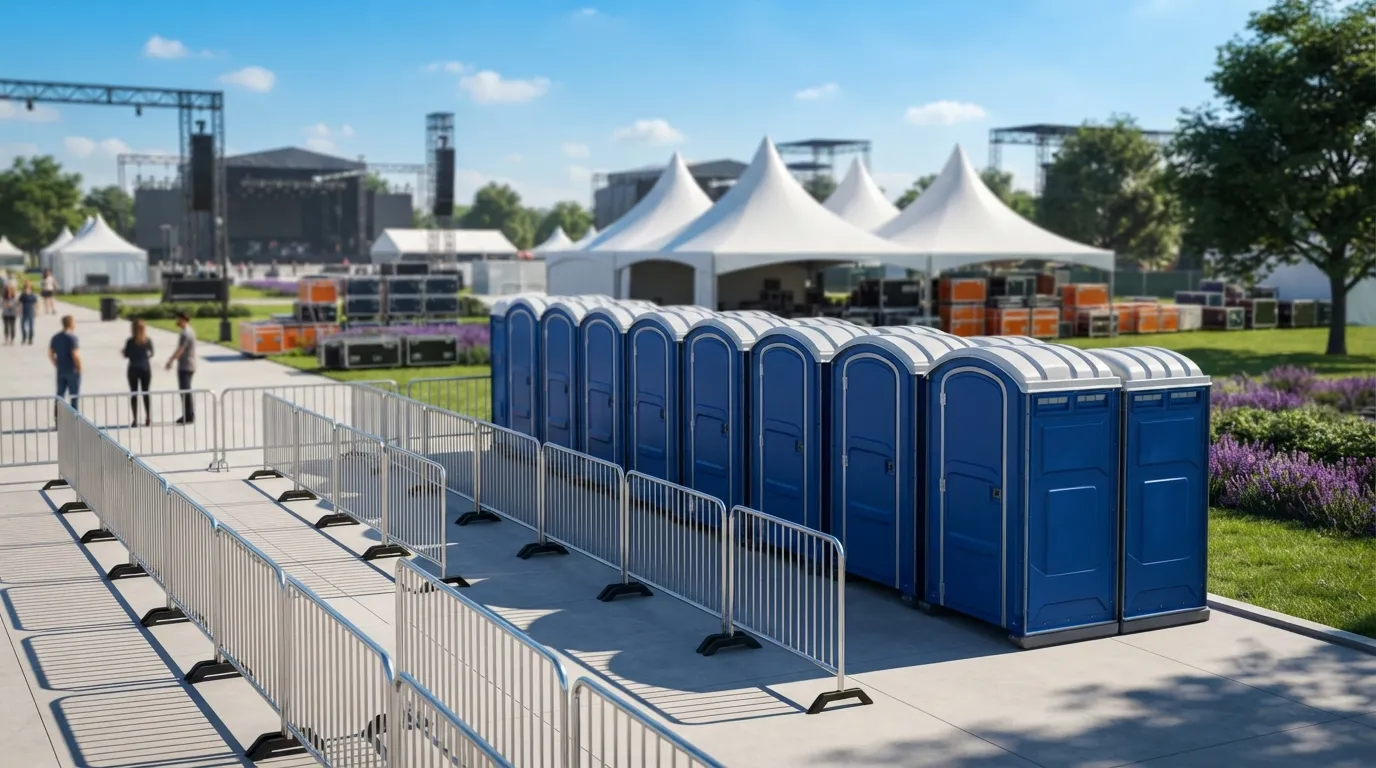
Where does the delivery truck need clearance, and does that need a permit?
Clearance is a delivery logistics question, not usually a permit question, but it decides whether we can even get equipment to you. A roll-off delivery needs about 60 feet of straight clearance behind the truck to drop or pick up a bin, which matters on narrow lots or shared driveways. If that clearance only exists on the street side of your property, that is when placement can cross into right of way territory and needs a city check. The same goes for a restroom trailer rental or a temporary power pole install, since a power pole permit is a separate conversation from a sanitation permit and depends on the utility connection, not the toilets. Check our dumpster permit requirements page and dumpster sizes and dimensions before you commit to a spot, especially for a 30 yard dumpster rental or 40 yard dumpster rental, because those need more room than a 10 yard dumpster rental.
Do I need a permit for a porta potty in my driveway?
No, typically not. A driveway is private property, and placement there is a spacing and access question, not a city permit question. Confirm your HOA does not have its own rule. See our porta potty rental checklist before delivery day.
Do I need a permit to put a dumpster on the street?
That is the case that needs direct confirmation with the city of Indio; it is NOT VERIFIED here. Placement on private property avoids the question. Ask us when you request a quote and we will help you check.
How much does a permit-free porta potty rental cost in Indio?
A standard unit runs in the range covered on our porta potty rental cost page, with day, week and month pricing broken out separately. Placement on private property does not add a permit fee. See porta potty rental per day for short jobs.
Does an ADA unit need special permit paperwork?
No separate city paperwork applies to ADA units specifically. What matters is the physical placement, covered by ADA Standards sections 403.5.1, 404.2.3 and 304.3.1. Our ADA restroom requirements page details clearance and reach specs.
What about septic or grease trap service, does that need a permit?
Routine septic pumping service and grease trap pumping are maintenance, not construction, so they typically do not need a permit. A residential tank is usually pumped every 3 to 5 years depending on tank and household size.
Next step
Get a delivery date
Tell us the address, the dates and the headcount. We size the order and confirm the route.