
Why do porta potties smell in the first place?
A standard porta potty rental holds waste in a 60 to 70 gallon tank underneath the seat, and that tank is sealed except when the door is open. Odor builds from three things: how full the tank is, how hot it gets, and how long since the last pump-out. Indio sun on a black roof cooks the tank contents, so a unit that would go two weeks without complaint in a mild climate needs attention sooner here. The ANSI/PSAI Z4.3 standard sets one service visit per week for up to 10 users across a 40 hour week as the baseline, but that number assumes moderate temperatures and moderate use. Push either variable and the interval has to shrink. A construction crew running a porta john rental at a job site off a busy road in Indio deals with heat and heavy midday use at the same time, which is exactly when smell complaints spike. Check the porta potty rental cost page if you're weighing a shorter service cycle against a lower weekly rate.
Does a deluxe or flushable unit smell less?
Yes, generally. A deluxe flushable porta potty uses a flush mechanism and a separate fresh-water rinse, which cuts the ammonia smell that builds in a standard unit between services. It still has a holding tank, so it still needs pumping, but the flush breaks up waste before it settles and that alone reduces odor between visits. For weddings and other events where guests notice smell fast, an event restroom rental built around deluxe or trailer units usually beats a bare-bones standard unit on comfort. A restroom trailer rental goes further with real plumbing and ventilation, and a 2 stall restroom trailer or 4 stall restroom trailer handles the traffic of a backyard wedding without the tank filling mid-event. If you're comparing options for a ceremony, the wedding restroom rental guide breaks down which unit fits which guest count.
Does placement affect the smell?
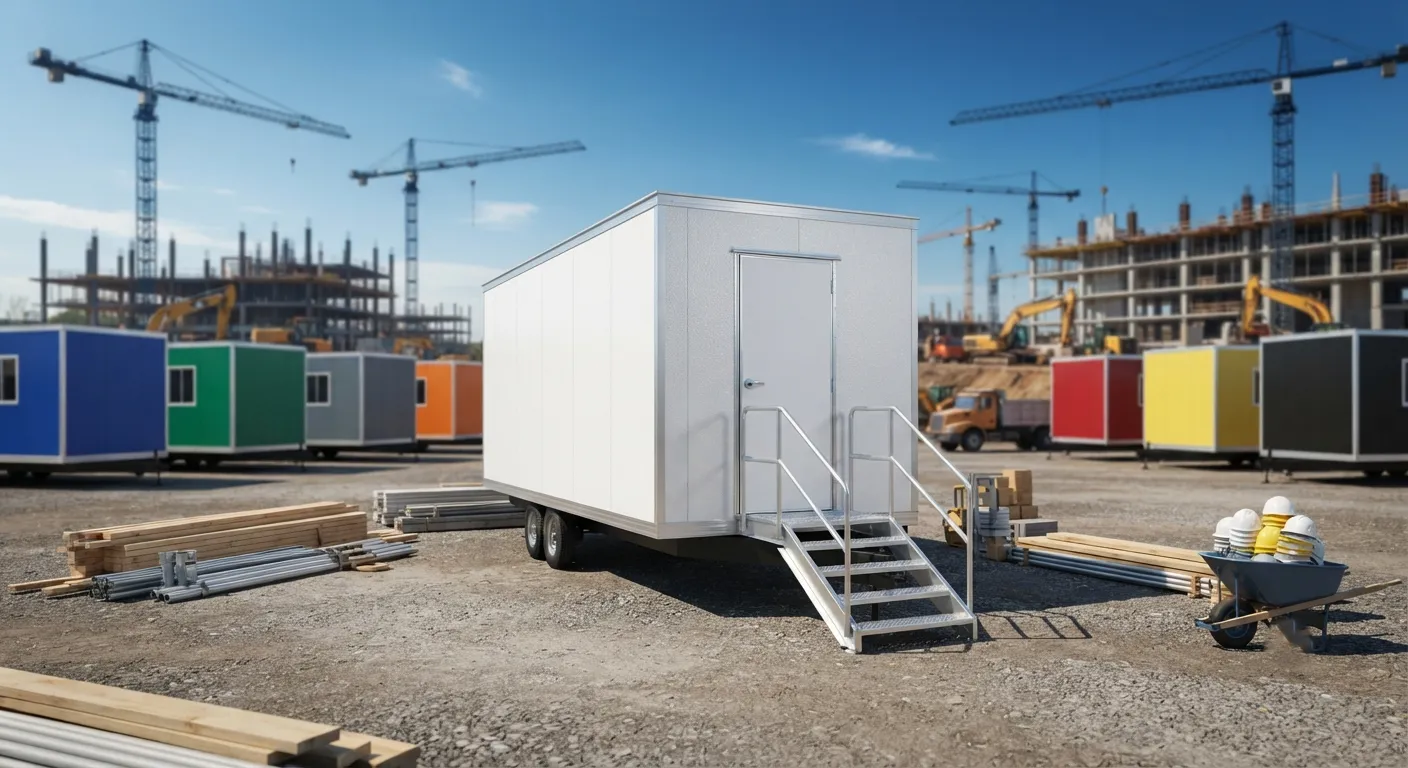
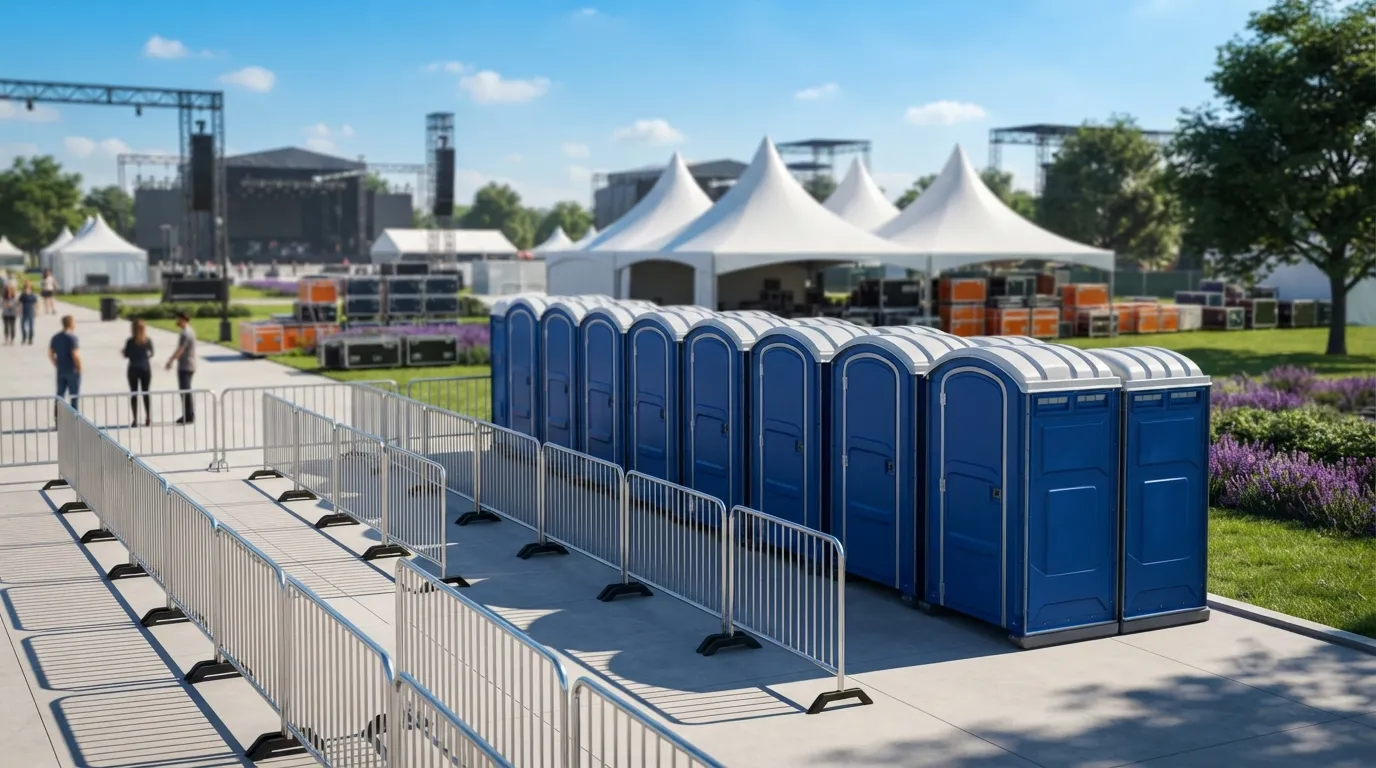
Placement matters as much as service frequency. A unit set in direct sun all day runs hotter and smells sooner than one placed in shade or against a north-facing wall. Airflow matters too: a unit boxed in against a fence with no breeze traps odor near the door. The porta potty placement guide covers ground stability and clearance, but heat exposure belongs in that decision alongside them. ADA Standards section 302.1 requires the ground under and around an accessible unit to be stable, firm and slip resistant, and a firm, well-drained pad also drains spilled rinse water faster, which helps keep the area from smelling on top of the unit itself. For multi-unit setups, like a festival restroom rental or county fair restrooms job, spacing units apart rather than clustering them tight cuts the shared-odor effect that shows up when several tanks sit side by side in full sun.
How often should service happen to control odor?
More often than the baseline, if the event or job is heavy-use or the weather is hot. Here's how the standard service tiers compare for planning purposes:
| Duration | Typical price | Best for |
|---|---|---|
| Day | $100 to $350 | One-day events, weekend permits |
| Week | $130 to $500 | Short jobs, week-long festivals |
| Month | $125 to $325 | Ongoing construction, construction site services |
A monthly porta potty rental in Indio during summer often needs service twice a week instead of once, even though the monthly rate doesn't change. That's worth flagging when you request a quote, since a crew running a home renovation porta potty through July won't get the same odor performance as one running the same schedule in November. OSHA 1926.51(c) sets the toilet count required per worker on a construction site, but it says nothing about servicing frequency, so that decision sits with the rental company and the customer. Servicing more often costs more, but it's the single biggest lever against smell once placement and unit type are settled. For agricultural sites, farm and agricultural restrooms fall under OSHA 1928.110's requirement of one facility per 20 field workers within a quarter mile, and heat plus dust out on farmland pushes odor control even harder.
Does hand sanitizer or a handwashing station affect odor?
Not directly, but a station nearby reduces mess tracked into the unit. 29 CFR 1910.141(d)(2) requires soap and towels or a hand-drying device where washing facilities are provided, since sanitizer alone doesn't meet that rule. A handwashing station rental placed next to your units is a small add that keeps the whole area cleaner.
Do porta potties smell worse in summer?
Yes. Heat speeds up bacterial breakdown in the tank, which is what produces the smell. Indio summers push units toward twice-weekly service instead of the standard once-weekly interval, especially on job sites with heavy daytime use.
Can I request extra deodorizer or more frequent pumping?
Yes, most rental companies will adjust the service schedule for an added fee. Ask about it when you set up a porta potty rental per day or weekly plan, particularly for outdoor events during peak heat months.
Are ADA units more prone to smell?
No, size doesn't change the odor mechanism. An ADA unit under ADA Standards section 213.2 still uses a standard holding tank, and the ADA accessible porta potty needs the same service interval as any standard unit nearby.
What about septic and holding tank smells at a fixed property?
A residential septic tank is typically pumped every 3 to 5 years depending on tank size and household use. If odor shows up between pumpings, check the septic tank warning signs page, or look at septic pumping service for an inspection near Indio.
Next step
Get a delivery date
Tell us the address, the dates and the headcount. We size the order and confirm the route.